Wamuguma AA – Kenya

EU* on orders over 75/99€

On Mondays and Wednesdays

Bratislava, Košická 21
Product detailed description
Small Farmers
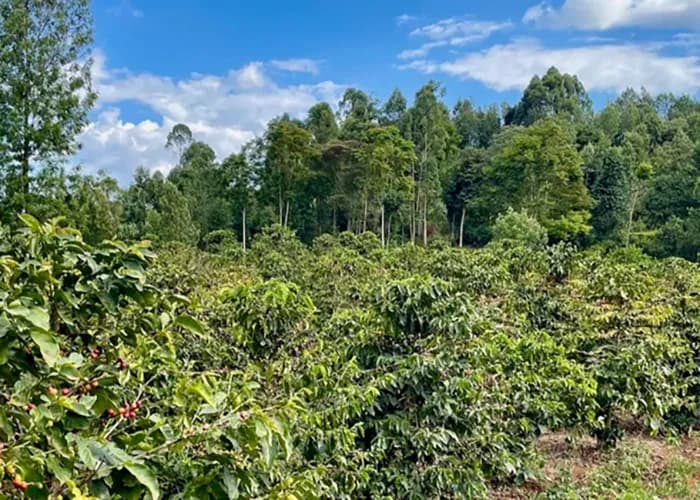
Wamuguma is a washing station or factory (as they are commonly called in Kenya), located in the city of Gatundu, in the extreme north of Kiambu County, near the border where Muranga County begins. Kiambu coffees are our favorites in Kenya, although they are not as "famous" as those from Nyeri or Kirinyaga, but they always stand out with intensely sweet profiles, complex phosphoric acidity, and floral notes, especially reminding us of the flavour of tree tomato fruit. The altitude of Wamuguma ranges between 1600 - 1800 masl and enjoys an average annual rainfall of 1098 mm. There are bimodal rain patterns that bring two wet seasons per year (hence 2 blooms and two harvests per year). The main harvest runs from November to January. The area is privileged by its red clay soil, rich in nutrients and organic matter.
Harvest and Processing
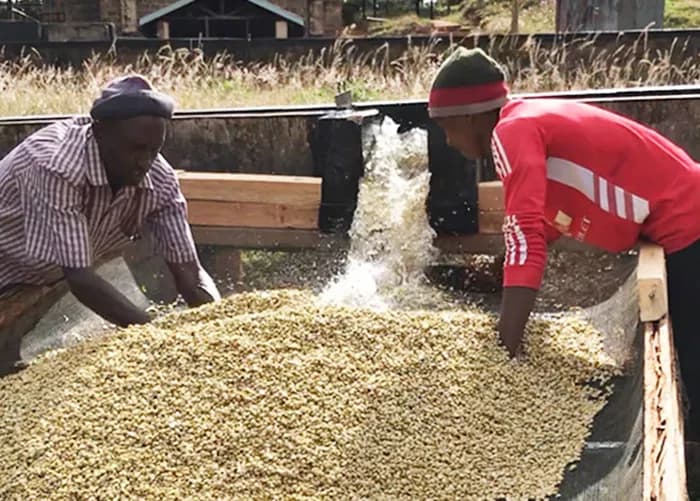
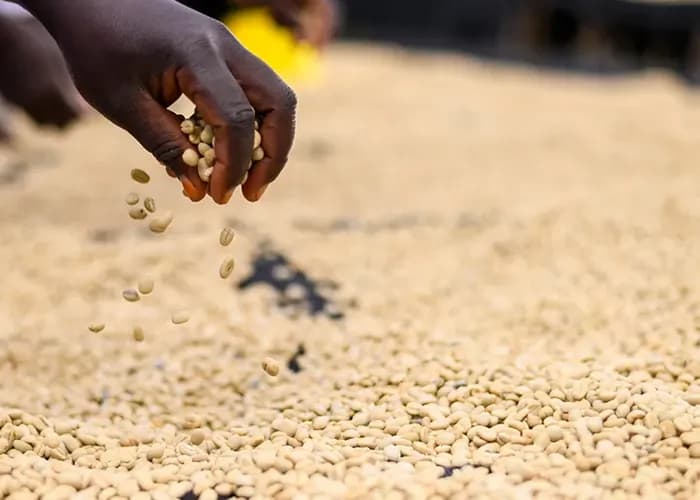
The Wamuguma factory together with the Handege factory form the Ritho FCS. This coop was founded in 1972, it currently has 2,548 active members, who in 499 hectares produce a total of 43,038 kg of green coffee per year. After harvesting, the coffee cherry is delivered to the factory, where it undergoes a fully washed or wet processing method with double fermentation. Water is pumped from the Thiririka river to reservoir tanks for pulping and recirculation. After pulping, the coffee is dry fermented overnight, before it's washed in grading channels, then soaked for 24-48 hours in clean water, and finally spread out on raised beds for selection and sun drying. Wamuguma is named after a local dignitary named Muguma, who loved coffee so much that he generously supported the local community in their coffee endeavors.
About this Coffee
Cupping score: 88.00
Washing Station: Wamuguma
Producer: 980 regional small farmers
Region: Kiambu
Altitude: 1700 – 1800 masl
Variety: SL28, SL34, Ruiru 11
Processing: washed
Crop: 2025/2026
About the Variety
SL28 was bred by Scott Laboratories in 1931 from the Tanganyika D.R. variety. It has become very popular across Kenya and is recognized as a variety with exceptional cup quality. It has broad leaves with copper tips and large beans. SL 34 is a French Mission mutation that originated on the Loresho Estate in Kabete. SL34 has broad leaves with bronze tips. It is grown throughout Kenya. SL34 is prized for its high productivity across various climates and wide altitude ranges. It is said to be resistant to drought and heavy rains.
Kenyan Process
The cherries are first pulped to remove the beans, then fermented, washed—sometimes in multiple cycles—and soaked in water. The bean is then dried and rested on specially constructed raised beds.