Worka Sakaro – Ethiopia

EU* on orders over 75/99€

On Mondays and Wednesdays

Bratislava, Košická 21
Product detailed description
Tarekech Werash
Tarekech Werash is a dedicated female coffee producer who collaborates with Sucafina through the Lalisaa Project. She established her farm in 1990 alongside her husband, Fikadu, and has since cultivated a profound pride in her coffee. Tarekech firmly believes that anyone who tastes her coffee will instantly fall in love with its rich flavor. As a participant in the Lalisaa Project, her primary objective is to secure a more consistent demand for her coffee and achieve better prices. With the increased income, she hopes to support the hardworking individuals who contribute to her farm’s success. Through the Lalisaa Project, Tarekech benefits from agronomy support provided by Sucafina Ethiopia, which includes access to training sessions that enhance her skills in cultivation, harvesting, and processing. Her unwavering commitment to high-quality production, coupled with her participation in the project, empowers her to access better markets and improve her earnings. Designed to uplift smallholder farmers, the Lalisaa Project streamlines the supply chain, enhances quality, and boosts yields, ultimately fostering a sustainable future for coffee producers like Tarekech.
Harvest and Processing
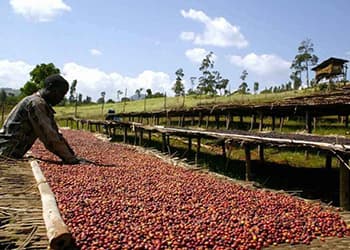
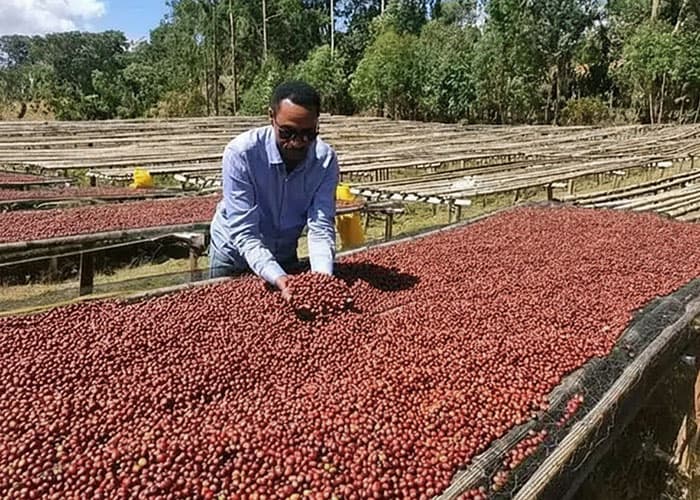
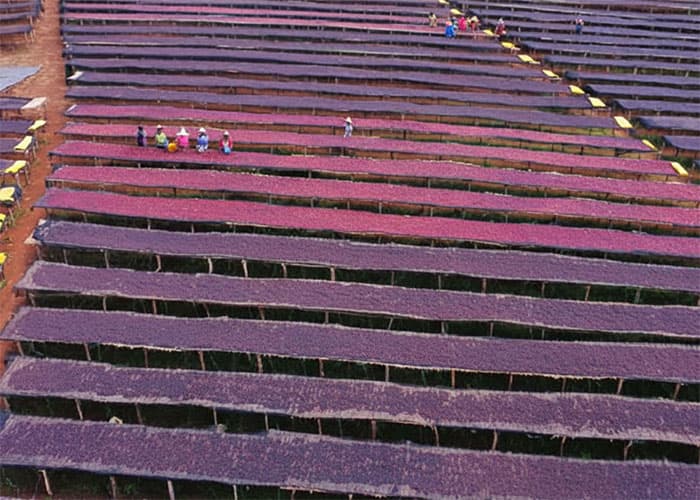
On her 5-hectare farm, Tarekech embraces the principles of regenerative farming. She cultivates a diverse array of local landrace varieties, historically known as Ethiopian heirlooms, which ensures genetic diversity and resilience. This holistic approach enriches the soil and enhances biodiversity, benefiting the entire farm ecosystem. Tarekech employs best farming practices, including pruning, stumping, and planting new coffee seedlings. The combination of high altitude and nutrient-rich soil creates an ideal environment for her coffee to thrive. However, it is her passion and dedication that truly set her coffee apart. By cultivating shade-grown coffee and producing her own compost, she eliminates the need for chemical fertilizers, fostering a more sustainable and environmentally friendly approach to farming. Tarekesh, her husband Fikadu and their family carefully handpick only the ripest, red cherry. Cherry is sorted and then dried on raised beds made from bamboo. Cherry sundries for approximately 18 to 24 days. Cherry is frequently turned and sorted to remove damaged cherry while drying.
About this Coffee
Cupping score: 86.75
Farm: Tarekech Werash’s farm
Producer: Tarekech Werash
Region: Gedeb, Yirgacheffe
Altitude: 2026 MASL
Variety: JARC varieties
Processing: natural
About the Variety
Heirloom Ethiopia is a catch-all term used for thousands of wild, uncataloged coffee varieties native to Ethiopia—the birthplace of Arabica coffee. Instead of single distinct varieties (like Bourbon or Caturra), an Ethiopian Heirloom lot is typically a regional field blend harvested from forest coffee trees or smallholder garden plots.
Natural Processing
Natural (or Dry) Processing is the oldest and most traditional method of preparing coffee. The defining characteristic is that the entire, intact coffee cherry dries around the bean before any hulling or washing takes place. Instead of removing the fruit skin and pulp immediately after harvest, the cherries are spread out in thin layers—usually on raised drying beds or concrete patios—to dry in the sun.